By Felix Odhiambo
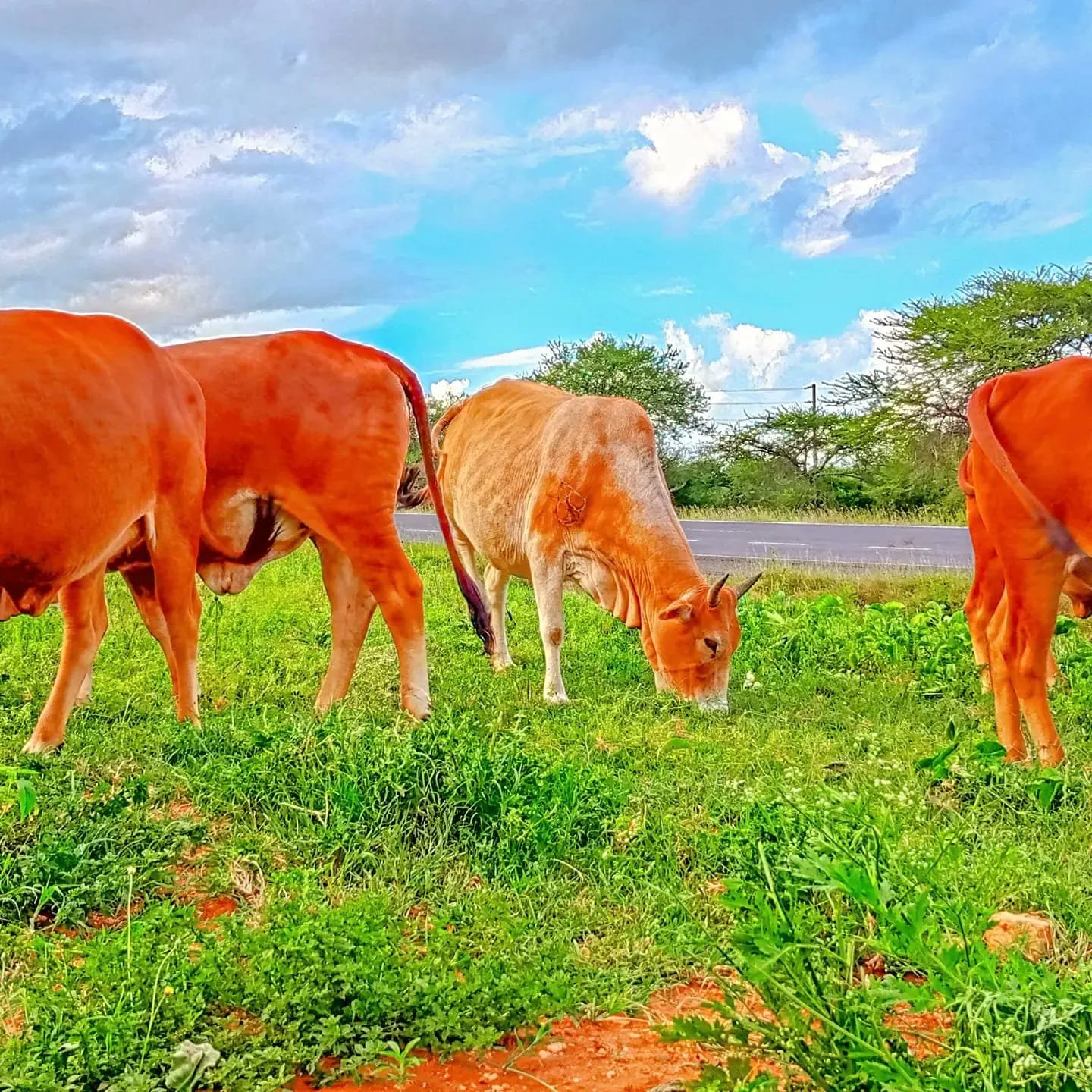
In the arid and semi-arid regions (ASALs) of Kenya, pastoralism is not just a way of life, it is the cornerstone of rural livelihoods, cultural identity, and food security. Yet, for decades, these communities have found themselves on the frontlines of climate shocks. Droughts have grown more frequent, unpredictable, and intense, leaving behind trails of livestock loss, economic hardship, and human suffering.
Climate science reinforces this reality.
According to the Intergovernmental Panel on Climate Change (IPCC, 2022), climate-induced extreme weather events are increasingly undermining food systems, water availability, and ecosystem stability across Africa. For Kenya’s pastoralists, whose livelihoods revolve around the health and movement of their herds, this vulnerability is pronounced.
Droughts not only decimate livestock herds, often the sole source of income and nourishment, but also dismantle the intricate social and economic safety nets that hold these communities together. It is within this challenging context that the Index-Based Livestock Insurance (IBLI) model was introduced in 2010. The goal was ambitious and commendable: to offer financial protection to herders against livestock losses caused by drought, and to help them plan better, avoid distress sales, and rebound quickly from shocks.
The Promise of IBLI

At its core, IBLI was a drought insurance product that used satellite-derived vegetation indices to estimate forage availability in grazing zones. If the vegetation cover dropped below a defined threshold, suggesting severe drought and poor pasture conditions, insured households would automatically receive payouts. The underlying idea was that with timely payouts, herders could buy water, fodder, or relocate animals, and avoid the heartbreaking and economically devastating choice of selling off their surviving livestock at rock-bottom prices.
Initial pilots of IBLI showed positive outcomes. Households that subscribed to the insurance were able to maintain better herd sizes during droughts, invest more confidently in animal health and education, and were less likely to rely on emergency aid.
Cracks in the System: Where IBLI Fell Short

Despite its early promise, IBLI faced growing criticism over time, particularly concerning the accuracy and fairness of the payouts. The model heavily relied on the Normalized Difference Vegetation Index (NDVI), a satellite-generated estimate of green vegetation, to infer pasture conditions. While NDVI is a widely accepted remote sensing tool, it is not infallible.
In Kenya’s ASALs, where microclimates vary significantly and grazing patterns can change rapidly due to livestock mobility, NDVI sometimes failed to capture localized vegetation loss. As a result, herders reported situations where they suffered massive livestock losses due to drought, yet the satellite data did not trigger a payout because the overall NDVI readings did not fall below the threshold.
This disconnect between satellite indicators and actual ground conditions eroded trust in the insurance product. By 2022, IBLI had been withdrawn from the market, primarily due to concerns over accuracy, commercial sustainability, and limited uptake.
Ground Truthing: Closing the Data Gap

From my ongoing work in Tana River County, a region within Kenya’s coastal ASAL belt, it became clear that one of the most critical steps toward revitalizing IBLI lies in bridging the gap between remote sensing data and reality on the ground. While NDVI offers useful landscape-level snapshots, it must be calibrated and verified with ground-based observations to reflect the actual condition of pastureland experienced by herders.
To do this, we incorporated vegetation analysis and field-based validation protocols, which involved working closely with local communities to record plant biomass, species composition, soil moisture, and forage quality. These insights helped contextualize satellite imagery, offering a more granular and locally grounded understanding of pasture stress.
But to go a step further, we turned to the Land Degradation Surveillance Framework (LDSF), a powerful scientific tool developed by CIFOR-ICRAF. LDSF combines biophysical measurements with socio-ecological data across systematically selected plots, enabling robust assessments of land health, including indicators such as soil organic carbon, vegetation cover, erosion, and infiltration rates. When integrated with NDVI, LDSF enhances the predictive power of models used in index-based insurance by grounding satellite insights in tangible ecological reality.
Bringing IBLI Back—But Smarter and More Inclusive

The findings from Tana River reaffirm a key lesson: climate insurance for pastoralists cannot rely solely on top-down models. It must be dynamic, context-responsive, and informed by both scientific data and indigenous knowledge. The integration of ground-truthed data and LDSF enables a more accurate reflection of drought impacts, increasing the credibility and acceptance of the insurance product among users.
However, accuracy alone is not enough. To improve its financial viability and broaden its relevance, the next generation of IBLI must go beyond livestock coverage. In a landscape where herders are diversifying into other livelihood strategies, such as small-scale farming, beekeeping, and trade there is an opportunity to design composite insurance packages
Resilience Through Innovation and Partnership

To realize this vision, collaboration is critical. Institutions such as the Ministry of Agriculture, County Governments, insurance providers, research organizations like ILRI and CIFOR-ICRAF, and pastoralist associations all have a role to play in building a next-generation climate insurance framework that works. By leveraging public-private partnerships, subsidies can be designed to support vulnerable households during the product’s scale-up phase, while market-driven innovations improve outreach and service delivery. More importantly, communities themselves must be engaged from the start, not just as beneficiaries, but as co-designers, co-researchers, and decision-makers.
What’s The Take Away- Insurance as a Tool for Dignity
Climate change will continue to test the resilience of Kenya’s dryland regions. But solutions like IBLI, when redesigned with scientific precision and social empathy, offer a lifeline not just to safeguard livestock, but to uphold the dignity, choices, and agency of pastoralist families navigating an increasingly uncertain world. What we need now is a bold reimagination of how climate risk can be managed not by relying solely on forecasts and indices, but by investing in holistic, grounded, and community-driven approaches that place the pastoralist at the center.